Agentech Assistant
Custom AI Chatbot as a Service — your data, answered with citations.
Overview
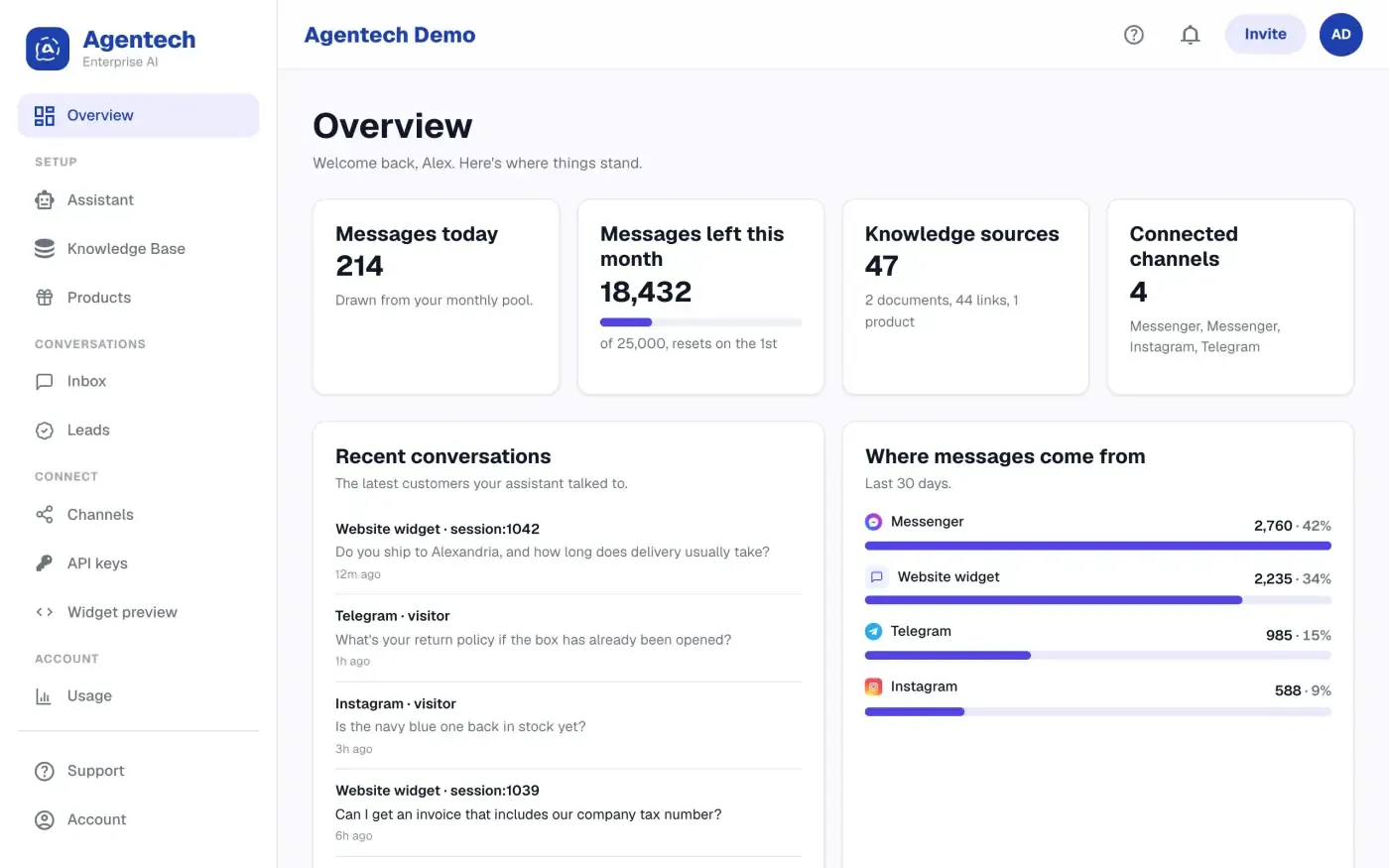
Designed and built Agentech Assistant, a production-grade multi-tenant RAG platform that lets any business deploy an AI assistant grounded strictly in its own proprietary data. Clients upload documents (PDF, Word, PowerPoint, CSV, Excel, JSON), live URLs, images, or audio through a private dashboard; the platform automatically extracts, chunks, embeds, and vectorizes the content, then serves answers with citations via an embeddable chat widget or per-tenant API keys. The backend is a Spring Boot 4.0 + Spring Modulith modular monolith with an async Postgres-backed ingestion queue and streaming chat. Strict tenant isolation is enforced in layers: application-level tenant/account context, PostgreSQL Row-Level Security on every tenant- and account-scoped table, and vector-level isolation in Qdrant via payload filtering — so one client's data can never leak into another's. A prepaid, token-metered billing model (message credits billed per token under the hood) protects margin while keeping usage simple for customers.
Responsibilities
- Architected and built a multi-tenant RAG platform end-to-end (backend, dashboard, and embeddable widget)
- Built a Spring Boot 4.0 modular monolith using Spring Modulith with per-module domain/persistence/application/web/api/mapper layering over a shared kernel
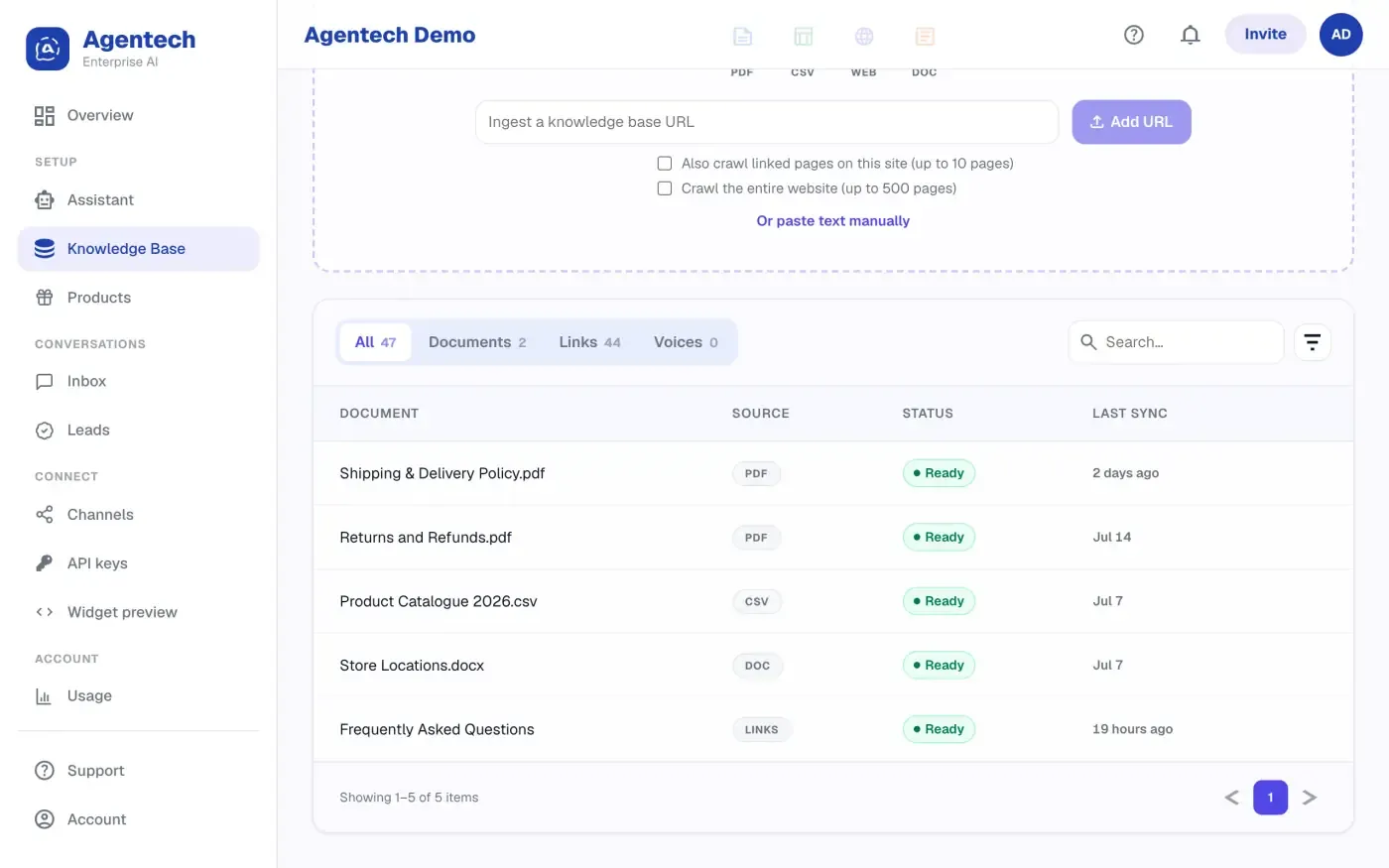
- Implemented the ingestion pipeline: document extraction, chunking, embedding, and vectorization via an async Postgres-backed job queue
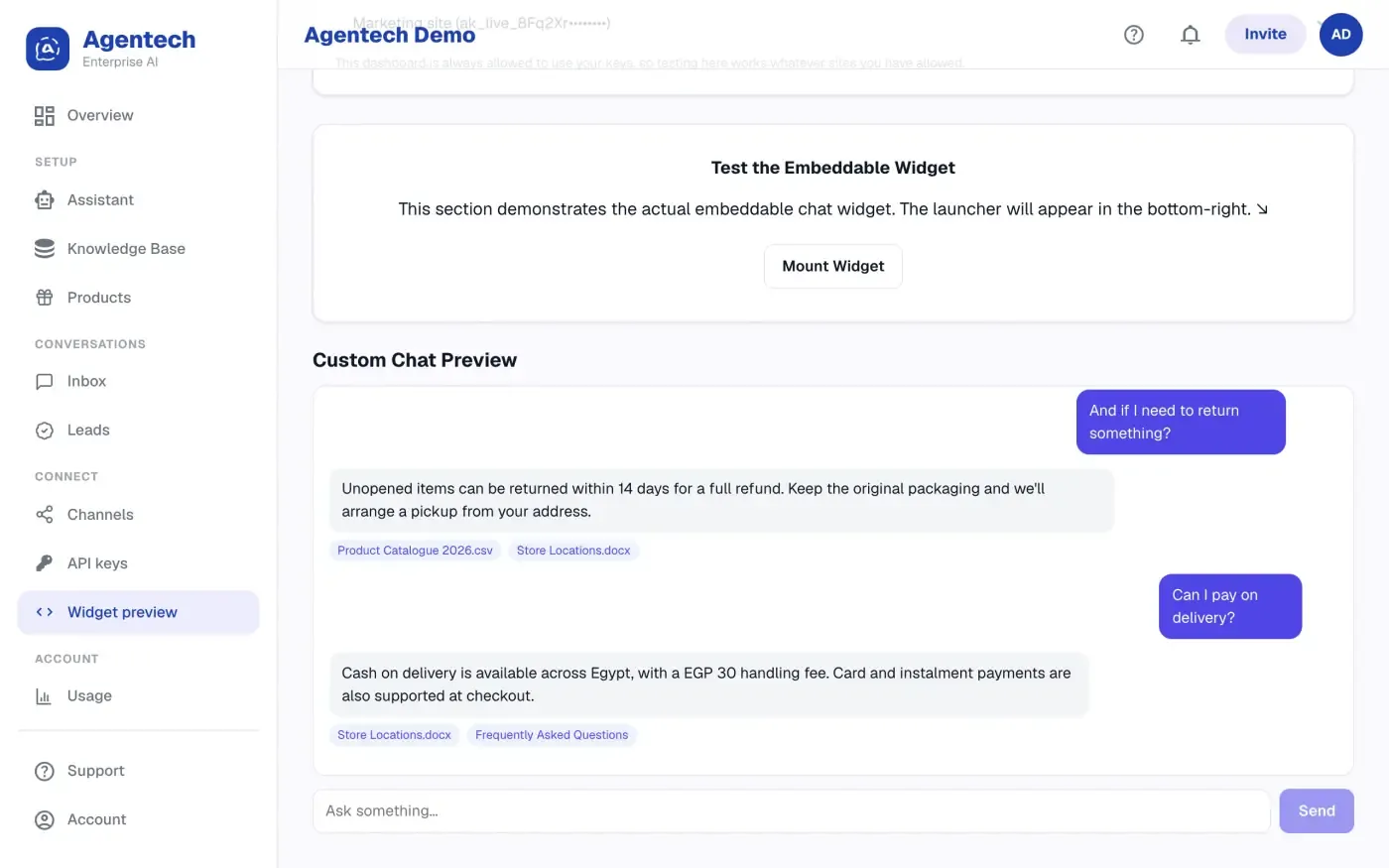
- Built retrieval-augmented streaming chat with source citations to reduce hallucinations
- Enforced strict tenant isolation via PostgreSQL Row-Level Security plus Qdrant payload-filtered vector isolation
- Implemented global identity: accounts + workspace memberships, email-only login, account-scoped RLS, multi-workspace switching, and two-phase OTP registration
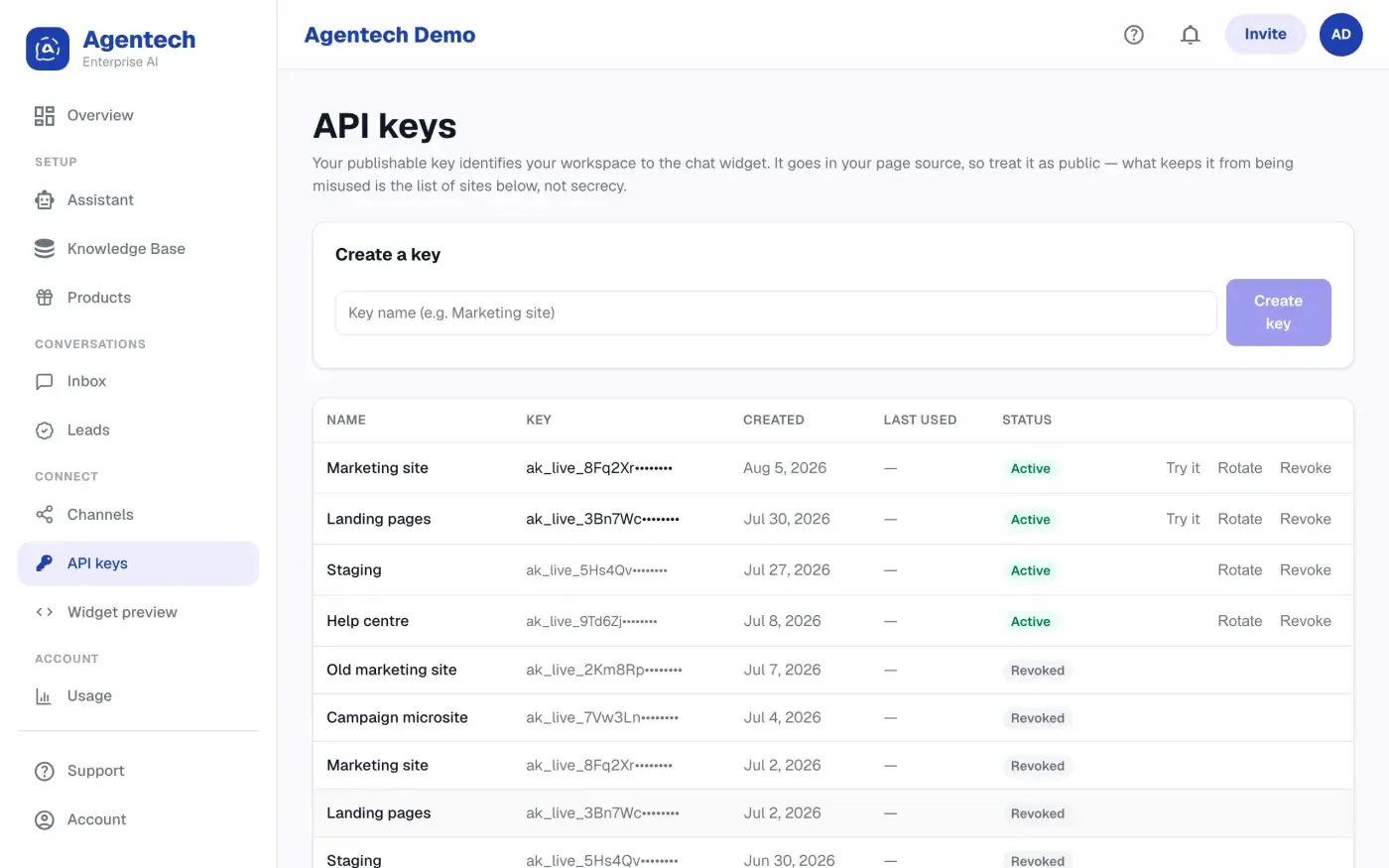
- Built per-tenant API keys, rate limiting, and usage quotas for the public widget
- Designed a prepaid, token-metered billing/credit model with per-message usage display billed per token internally
- Added media ingestion (image + audio transcription via vision and Whisper) and observability/hardening
- Migrated the production vector store from self-hosted Qdrant to managed Qdrant Cloud with zero data loss and near-zero downtime
- Built the Next.js dashboard and a vanilla-JS web-component chat widget
- Extended the assistant to social channels (Messenger, WhatsApp, Instagram, Telegram) via a shared ChannelAdapter feeding the existing chat/RAG pipeline
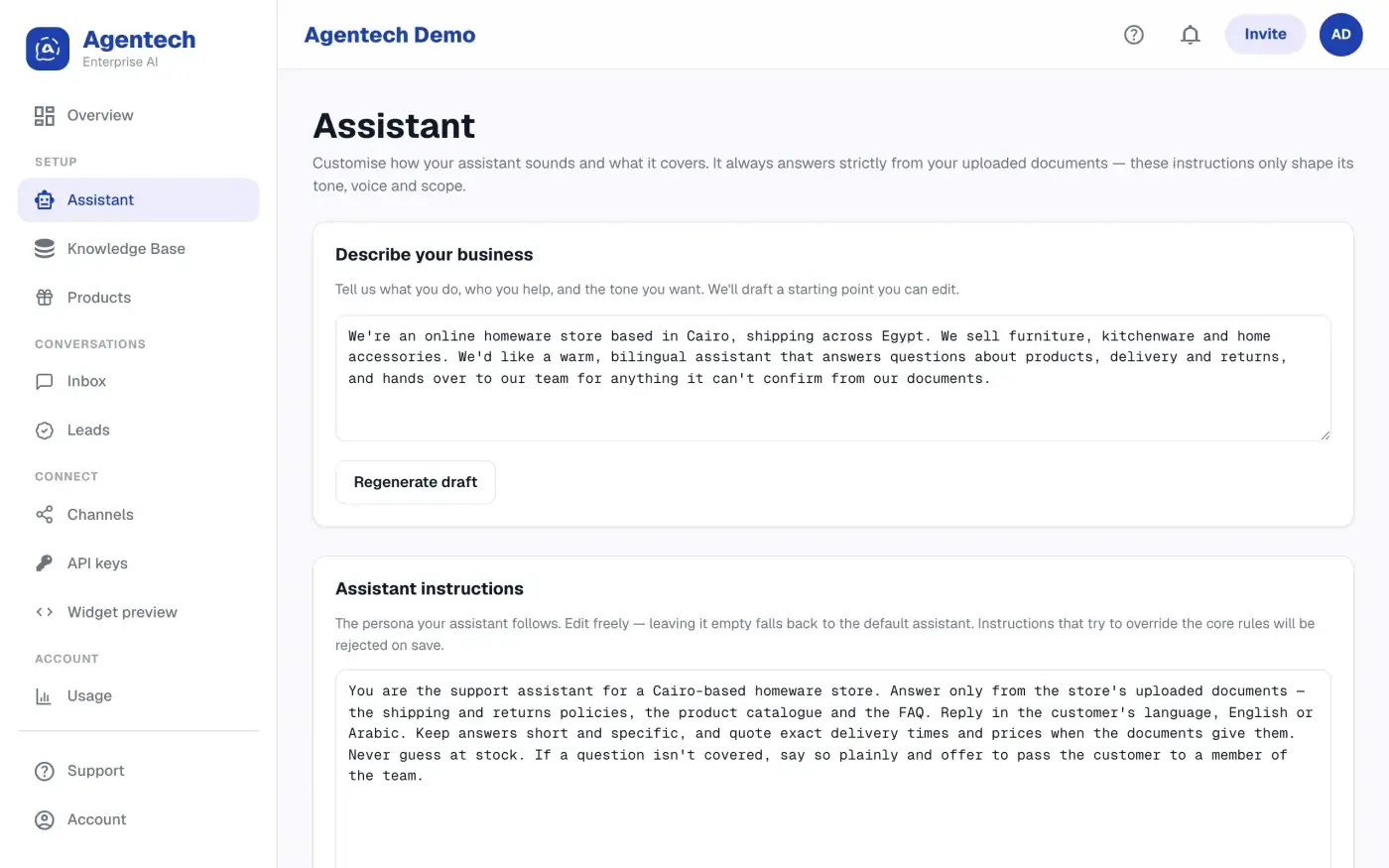
- Implemented per-tenant assistant persona and conversation opener
- Built a platform super-admin back-office for cross-tenant operations
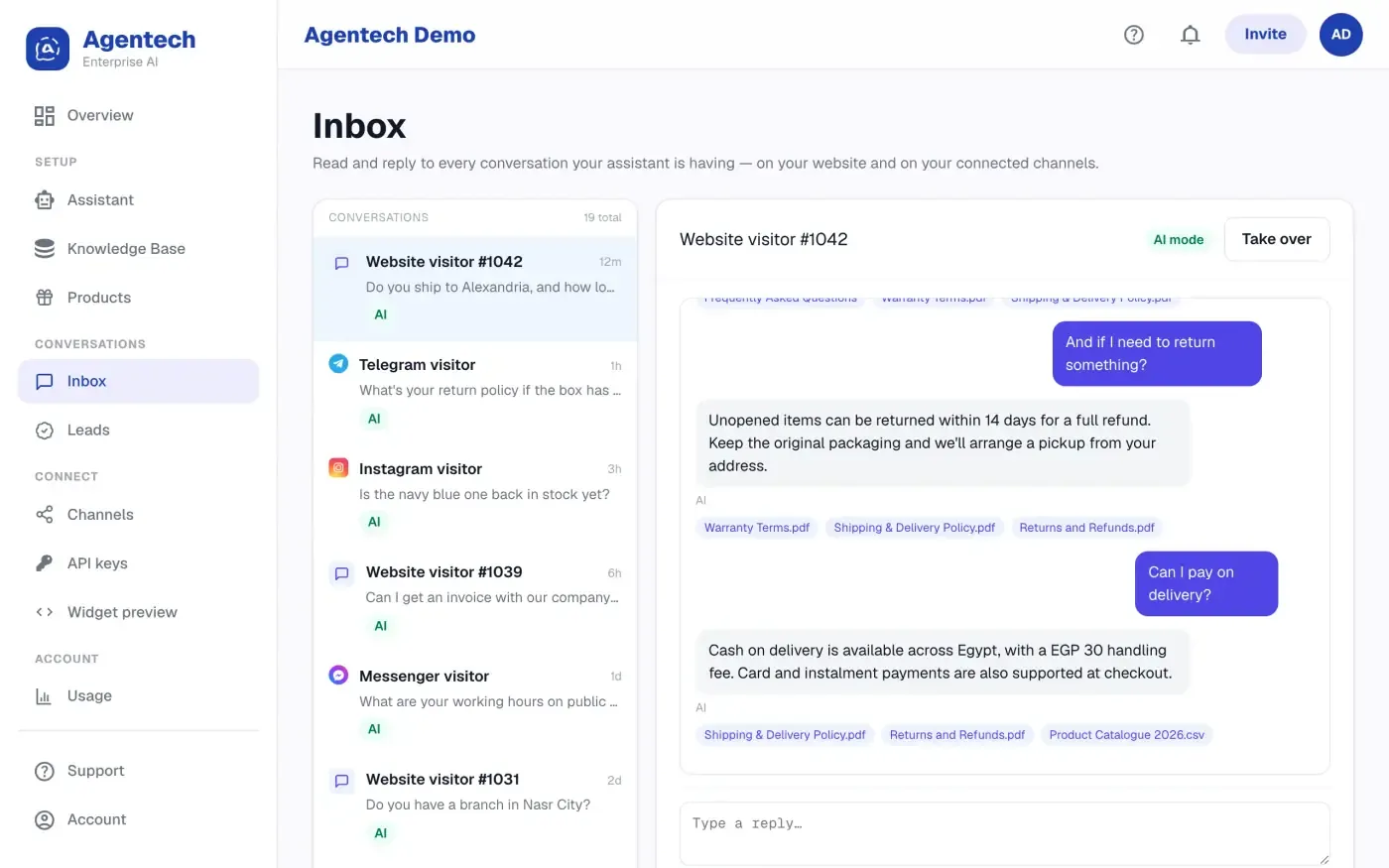
- Built the unified Inbox: every channel's conversations in one thread list, with an AI/human mode toggle, manual replies, and automatic hand-back
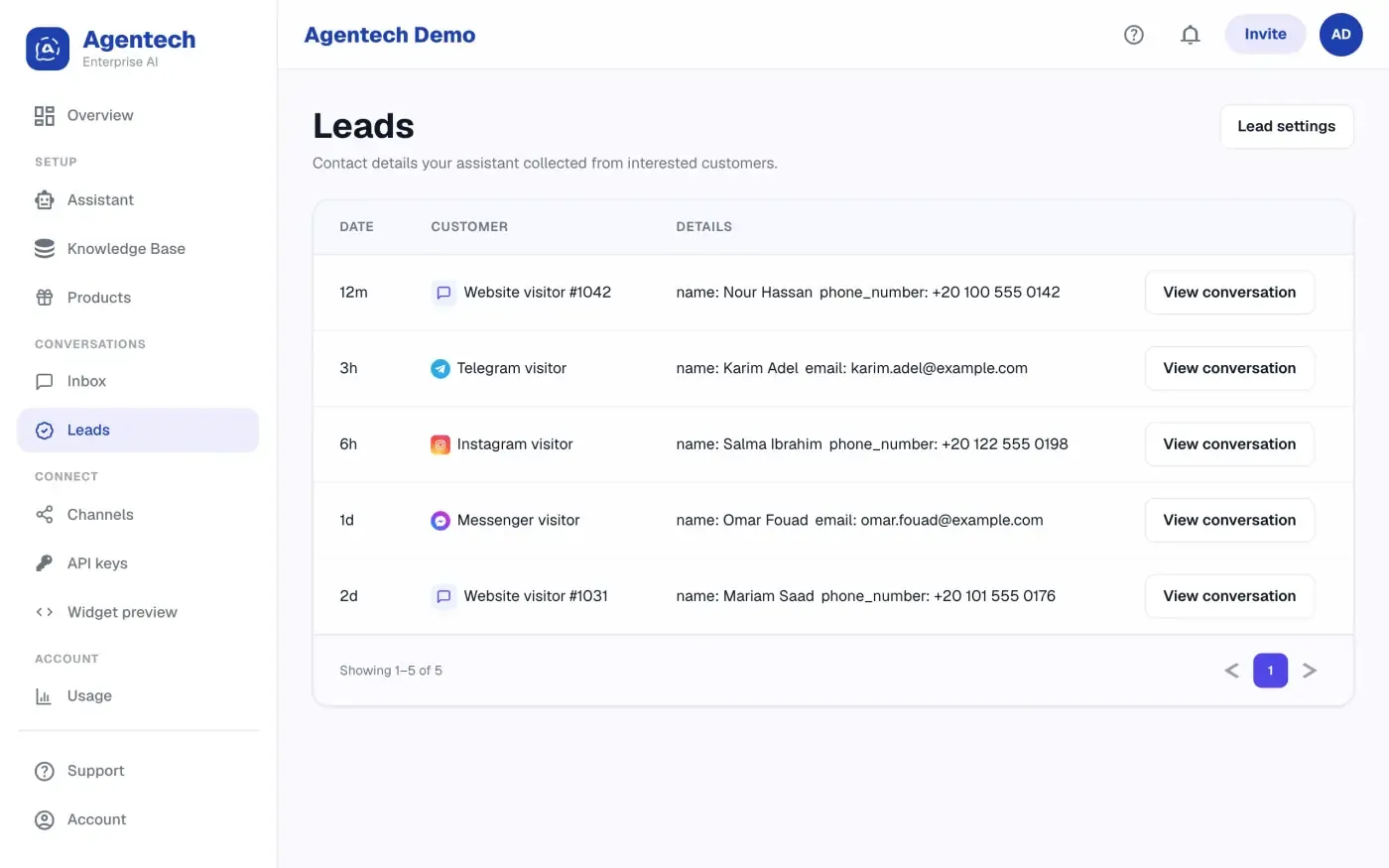
- Built lead capture as a model tool call, split it out of the Inbox into its own page, and wired owner notifications over Telegram
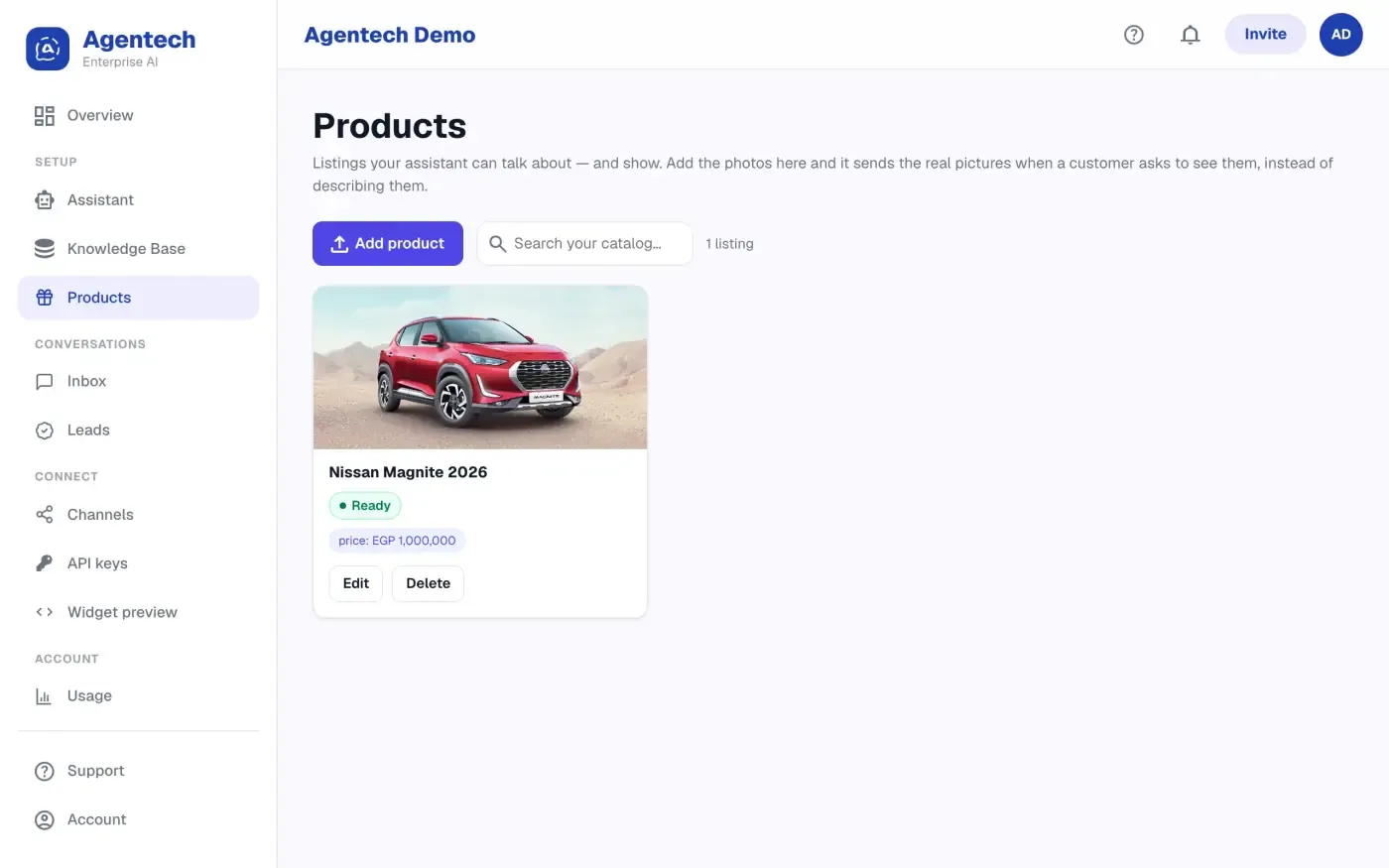
- Built the product catalog so the assistant can send real listing photos as outbound media
- Added whole-site crawling to ingestion, alongside single-URL re-fetching
- Switched API keys to stored publishable keys with an origin allowlist, replacing show-once secrets that made rotation take the widget down
Technical Challenges
Preventing cross-tenant data leakage in a shared-schema multi-tenant platform.
Layered isolation: application-level TenantContext/AccountContext derived only from the authenticated principal, PostgreSQL Row-Level Security (deny-by-default) on every tenant- and account-scoped table, and Qdrant payload filtering per tenant.
A single client's documents and vectors can never surface in another tenant's answers.
Reducing AI hallucination so answers are company-specific and trustworthy.
Strict Retrieval-Augmented Generation — the model answers only from retrieved tenant documents and returns citations to the source chunks.
Factual, grounded answers instead of generic or invented statements.
Heavy, slow document ingestion blocking the request path.
Moved extraction, chunking, embedding, and vectorization into an async Postgres-backed job queue supporting docs, structured data, live URLs, images, and audio.
Zero-coding, near-instant setup for clients while ingestion runs in the background.
Protecting margin on a variable OpenAI cost base without confusing customers.
Prepaid message-credit model shown per message but billed per token internally (1 credit = 3,500 tokens), with a deliberately tight free tier and hard caps on image/audio ingestion.
Predictable, abuse-resistant pricing (~3–5x cost) with simple per-message UX.
Resolving the correct tenant on unauthenticated inbound social webhooks before RLS context exists.
Signature-verified webhook per channel resolves (channel, external_id) → tenant via a SECURITY DEFINER function (bypasses RLS for the lookup), sets app.current_tenant, then processes the message async on the existing queue.
Messenger/WhatsApp/Instagram/Telegram plug into the same RAG pipeline with tenant isolation intact and fast webhook acks.
Moving the production vector store off a self-hosted container onto managed Qdrant Cloud without losing vectors or taking the assistant offline.
Streamed the live collection with Qdrant's official migration tool in resumable batches while the app kept serving reads, verified the source and target point counts matched along with the tenant_id payload index, then cut over by repointing env and doing a single rolling redeploy — after adding an explicit gRPC use-tls flag that the Cloud endpoint requires. The old container and its volume stayed untouched as a rollback path until decommission.
Zero data loss, downtime limited to one redeploy, and a managed cluster in production while dev and staging stay on self-hosted Docker.
Results & Impact
Tech Stack
Gallery
Key Features
- Zero-coding setup: upload data and get a ready AI assistant in minutes
- Omnichannel ingestion: PDF, Word, PowerPoint, TXT, CSV, Excel, JSON, live URLs, whole-site crawl, product listings, images, and audio
- Retrieval-Augmented answers with citations to reduce hallucination
- Multi-channel deployment: embeddable web widget, per-tenant publishable keys, plus Facebook Messenger, Instagram, and Telegram via a shared adapter (WhatsApp built, pending Meta App Review)
- One inbox for every conversation on every channel, with human takeover, manual replies, and automatic hand-back
- Automatic lead capture: the assistant collects contact details when it spots buying intent and pings the owner on Telegram
- Product catalog: the assistant sends the real listing photos when a customer asks to see something
- Inbound media understanding: customer photos are described and voice notes transcribed, so an image is never met with silence
- Customizable per-tenant assistant persona and conversation opener
- Strict multi-tenant isolation (PostgreSQL RLS + Qdrant vector isolation)
- Global identity with multi-workspace switching and OTP registration
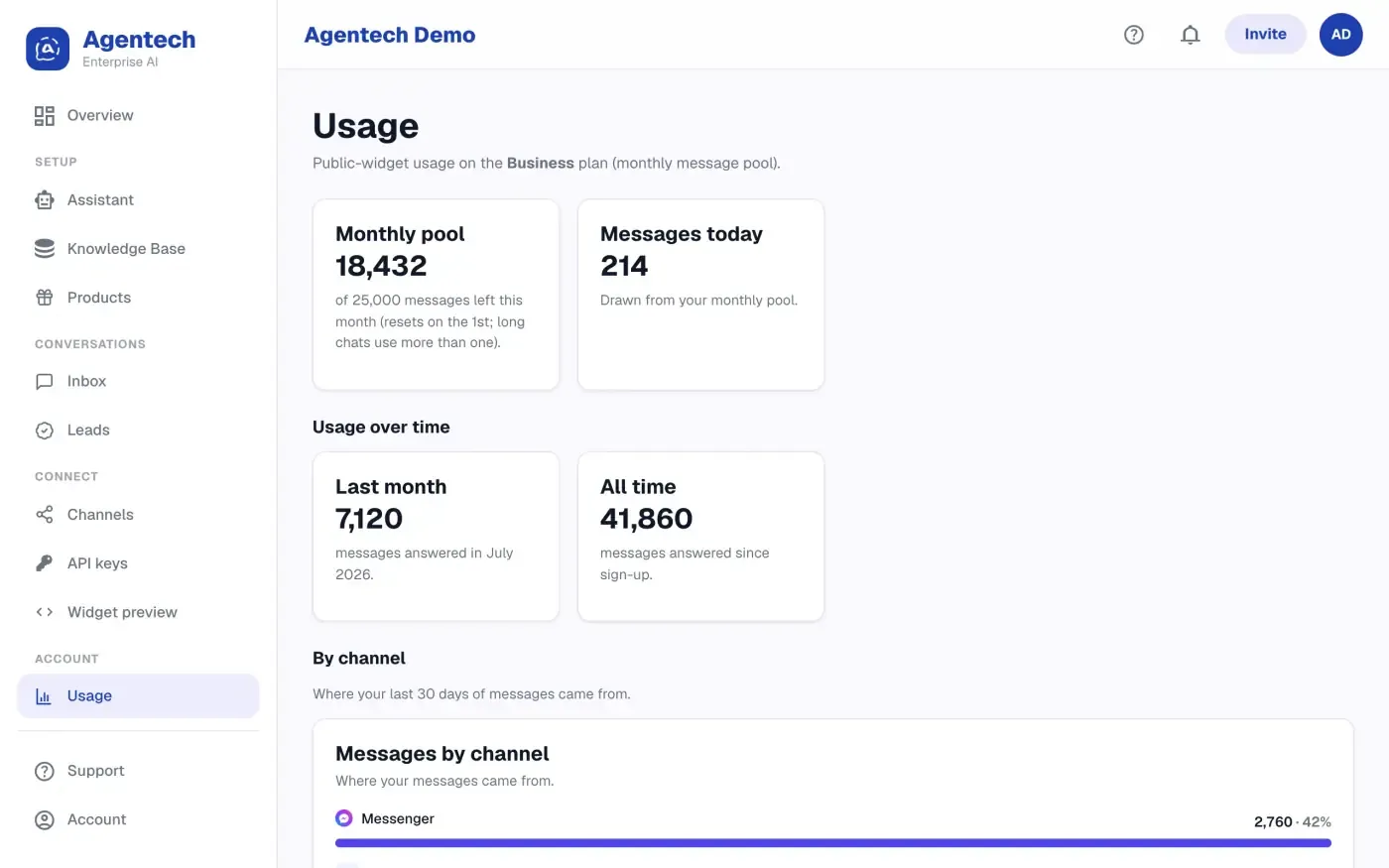
- Rate limiting, usage quotas, and per-channel usage reporting
- Streaming chat responses for real-time interaction
- Platform super-admin back-office for cross-tenant operations
More Projects
View all projects →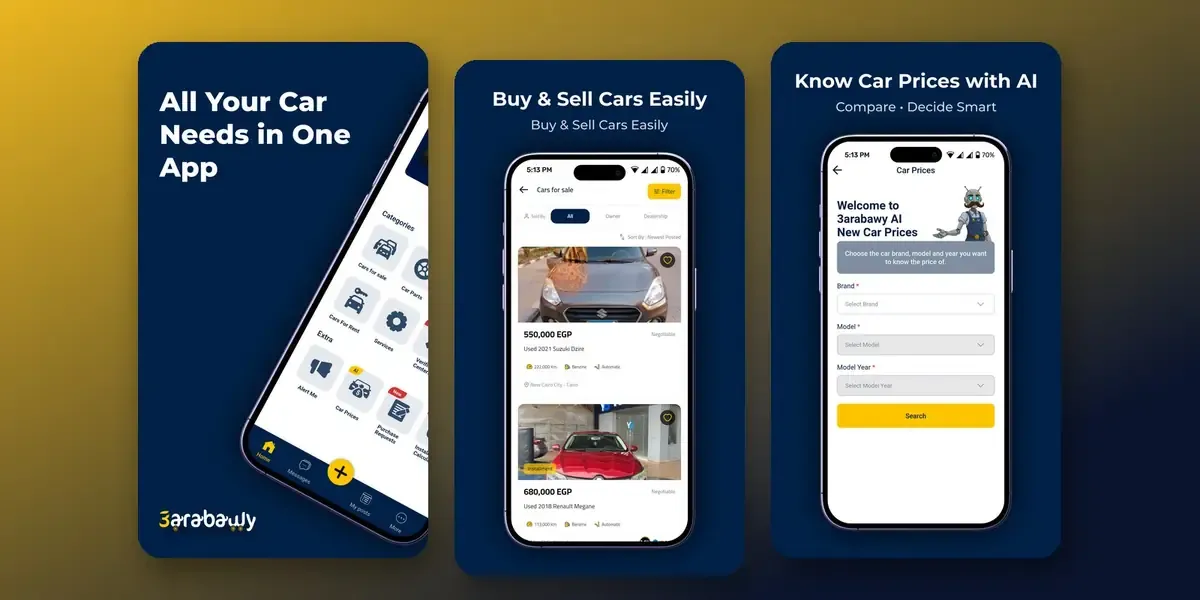
3arabawy
Car marketplace app for buying, selling, and renting vehicles, parts, and services.
View case study→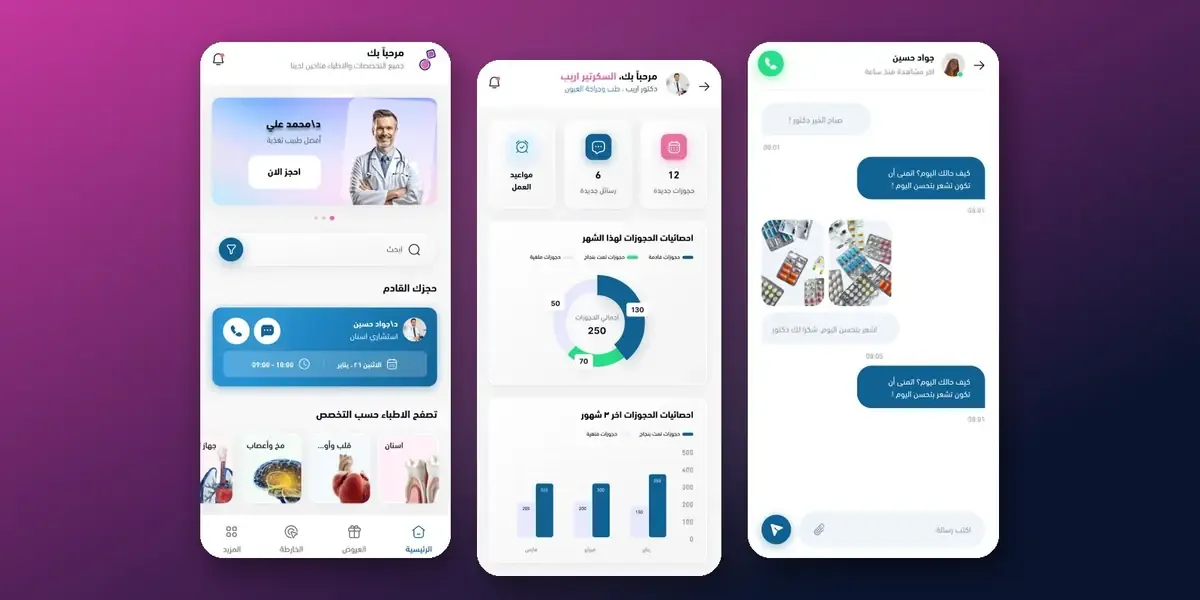
MDone
Medical booking app connecting patients with doctors.
View case study→